
Lory’s Pine Needle Baskets
Lory Brown’s museum-quality coil baskets are fashioned from the needles of both southern yellow pine and ponderosa pine trees.
Small bundles of needles are tightly stitched together using strips of raffia, a fiber from palm leaves, to form sturdy, functional and intricate works of art.
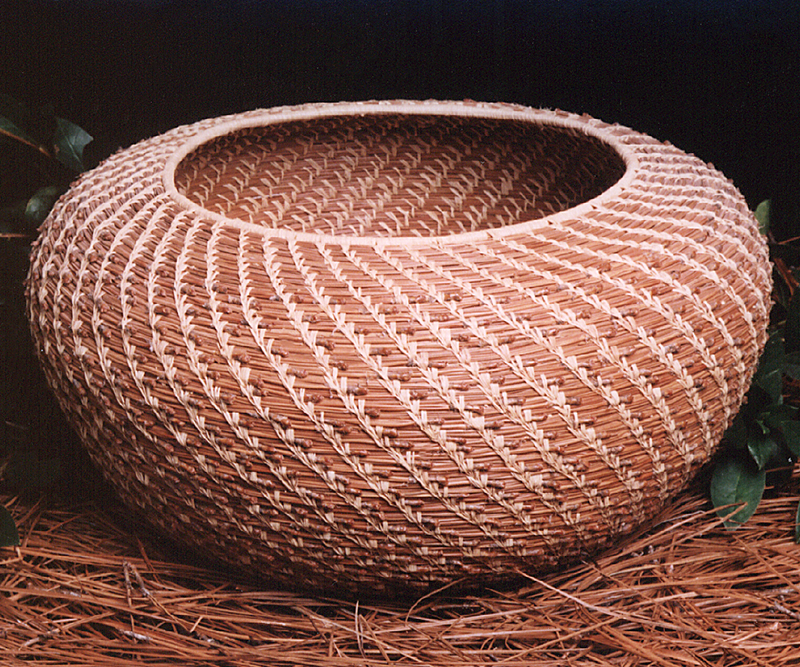
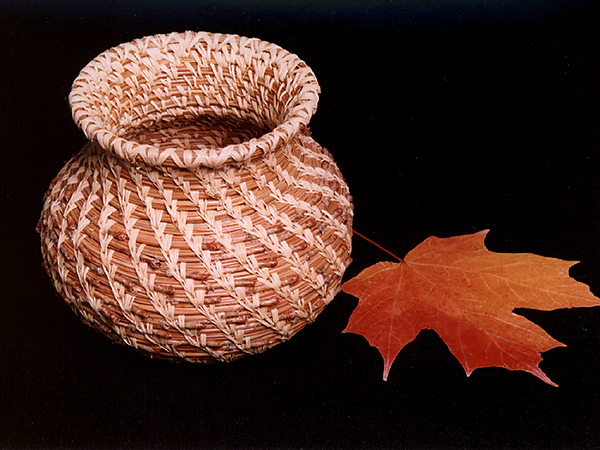
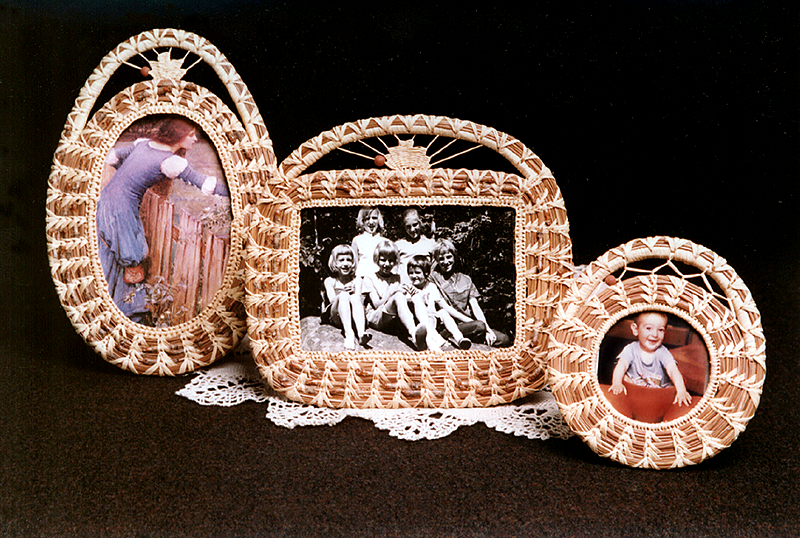
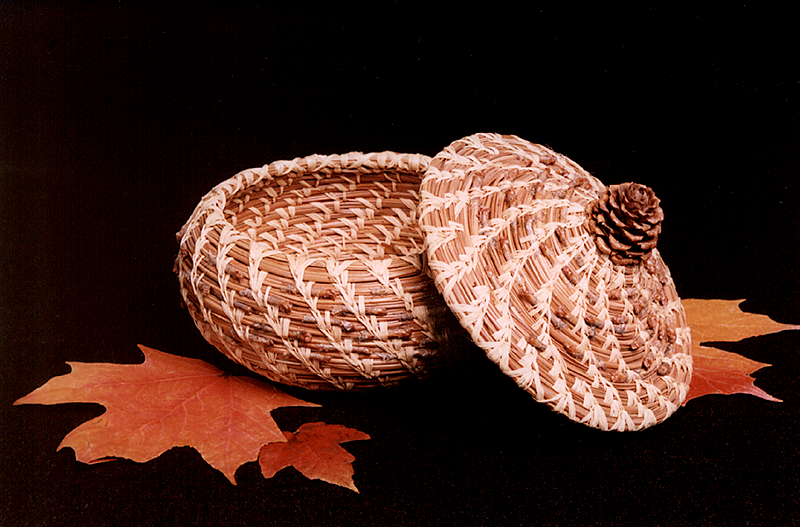
Each piece is detailed with such unique features as pine cone handles on the lids of covered baskets, finen lacey filegree designs incorporated into handled baskets, lids, and frames, or spiral patterns utilizing the knobby end of pine needle clusters around the basket or lid.
Lory Describes the Process
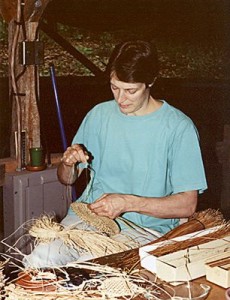
Lory beginning a basket.
Although baskets can be fashioned from almost any pine needles, I select species that produce the longest needles – mostly Southern Yellow Pine (16″), Ponderosa Pine (9″), and some Loblolly Pine (5″).
My baskets are created using a coiling technique, one of the most time-consuming basket-making techniques. I begin by soaking a small bundle of pine needles in water overnight so that they become flexible enough to coil tightly for the first coils of the base. Once started, I usually use un-soaked needles for the rest of the basket. A continuous bundle of pine needles make up the coil, as I work my way around the basket.
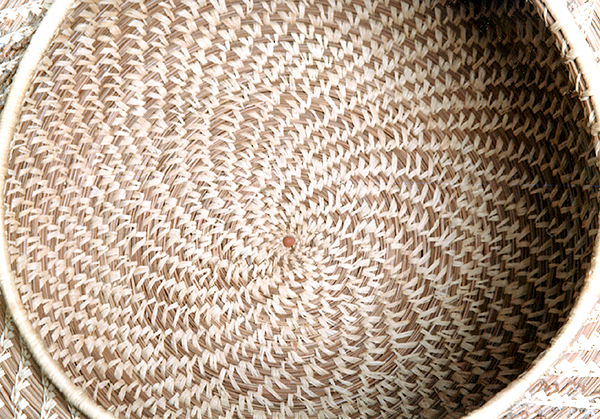
Each layer of the coil is bound and stitched to the previous using raffia from palm leaves, which is split into ¼-inch strips. I use a tapestry needle to weave the raffia around the coils using many different stitches to produce various spiraling designs around my baskets.
I often leave the knobby sheath at the end of the pine needle to create texture and patterns on my baskets, lids, frames, and ornaments. I use small pine cones as knobs for some covered baskets and as the center for some ornaments. Bright yellow lichen and colored raffia are incorporated into some pieces for accent. For a lighter, frillier feel, I create and add intricate teneriffe patterns (woven raffia around various shapes of wire) to baskets with handles, plates, frames and ornaments. I have also included caning patterns in some basket lids. The rich red clay of my husband’s
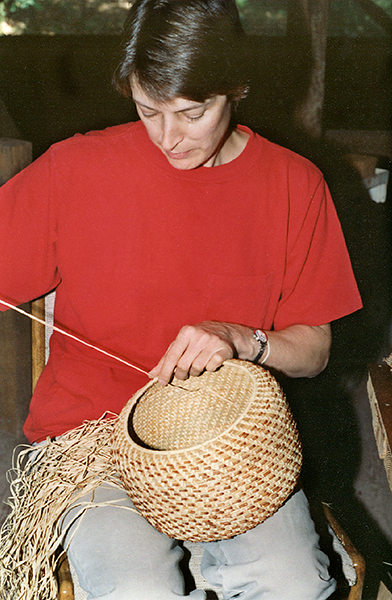
pottery blends well with the tones of the pine needles, so I use a pottery base in some of my baskets.
I choose not to use shellac or varnish on my baskets in order to preserve the natural pine aroma, so there is no finish on them that will crack or deteriorate over time. They are stitched tightly using dry materials, making them sturdy and durable for their lifetime.
They can be dipped periodically in water and dried thoroughly to remove dust and restore the beauty of each piece.
-Lory